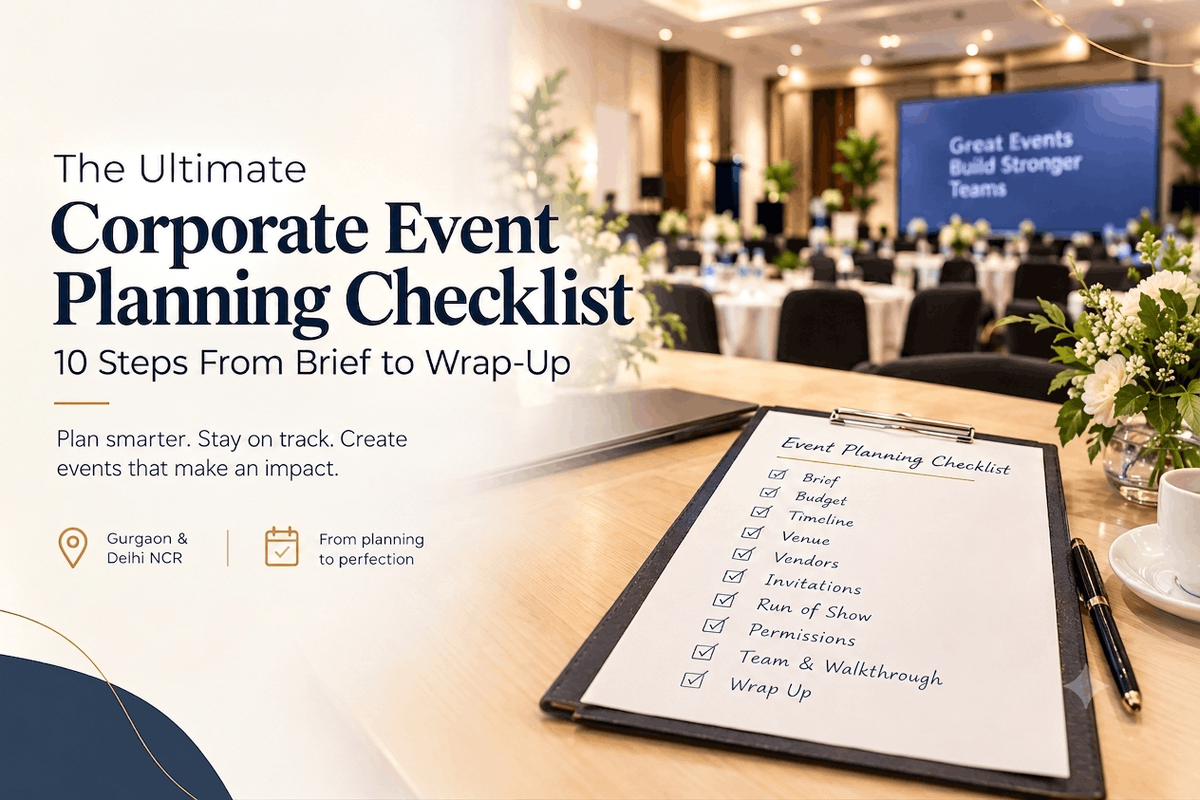
The Ultimate Corporate Event Planning Checklist: 10 Steps to Nail It (From Brief to Wrap-Up)
You’ve been handed a corporate event to plan and a deadline that felt tight the moment it landed in your inbox. Somewhere between chasing vendor quotes, confirming a guest count that keeps changing, and reporting back to leadership, it’s easy to lose track of what’s actually done.
A well-structured corporate event planning checklist fixes that. It’s not about doing more, it’s about doing things in the right order so nothing gets rediscovered three days before the event. This event planning checklist India teams can actually use is built around how corporate events get planned in Gurgaon and Delhi NCR, not lifted from a generic US conference guide.
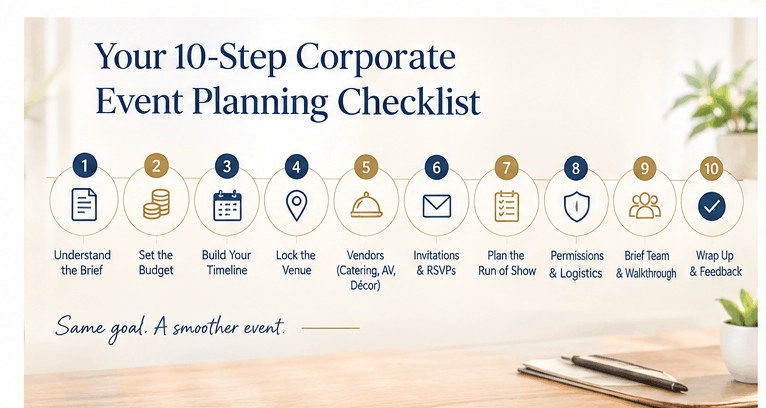
Step 1: Nail the Brief Before You Touch a Vendor List
Get the basics in writing before anything else: purpose, headcount, budget ceiling, date flexibility, and who signs off on decisions. A product launch, a client dinner, and an annual town hall need completely different venues and timelines, and skipping this step is the single biggest reason planning drags on.
Step 2: Set the Budget, Then Rank What Matters
Set a number before you start venue hunting, not after you’ve already fallen for a space that’s 40% over. Rank your priorities: if the venue matters more than the catering spread, say so now. It saves arguments later when trade-offs come up.
Step 3: Build Your Corporate Event Timeline
This is where most delays start. For a mid-size corporate event, most planners work backward from 8 to 12 weeks out: objectives and budget locked first, venue and headline vendors next, invitations mid-cycle, and final headcount and run of show in the last two weeks. Creating a realistic corporate event timeline this early ensures every milestone gets completed on schedule instead of collapsing into the final two weeks. A large multi-day conference needs longer, sometimes months, but a standard offsite or client event rarely does.
| When | Lock Down |
|---|---|
| 8–12 weeks out | Objectives, budget ceiling, date flexibility & core approvals |
| 6–8 weeks out | Venue shortlisted & locked, catering, AV & staging vendor |
| 4–6 weeks out | Invitations sent, RSVP tracking initiated, décor brief finalised |
| 2 weeks out | Final headcount, run of show schedule, vendor confirmations |
| Week of event | Full venue walkthrough, on-ground staff briefing, contingency plan |
| Post-event | Vendor payments against contracts, attendee feedback, budget reconciliation |
Step 4: Shortlist and Lock the Venue
Shortlist three venues that fit your headcount and budget, then visit in person before signing anything. Ask specifically about parking capacity, backup power, AV compatibility, and cancellation terms. Following a detailed corporate event planning checklist at this stage reduces last-minute surprises, since venue issues are the hardest to fix close to the date. In Gurgaon and Delhi NCR, popular corporate venues get booked out fast around Q4 and wedding season , so lock this early rather than assuming availability.
Step 5: Line Up Catering, AV, and Décor
Brief each vendor separately rather than assuming the venue’s in-house team covers everything. For catering, build in vegetarian and Jain options as a default rather than an afterthought, since a meaningful share of Indian corporate guest lists will need one. Check whether vendors are GST-registered and can issue a proper tax invoice, since your finance team will need this for reimbursement.
Step 6: Handle Invitations and RSVPs
Send invites with the essentials: date, time, venue, dress code, and a clear RSVP deadline. Track responses in one shared sheet, not across five email threads, so your final headcount to the caterer is a number you actually trust.
Step 7: Plan the Run of Show

Write a minute-by-minute schedule for the day: arrival, welcome, program segments, meal breaks, and close. Share it with every vendor and your on-ground team in advance, not on the morning of, so everyone knows what happens next without checking with you.
Step 8: Sort Local Permissions and Logistics
Step 9: Brief Your Team and Walk the Venue
Do a full walkthrough with your on-ground team and key vendors before the event, not the morning of. Assign one point person per area (registration, catering, AV) so decisions don’t all funnel back to you during the event itself.
Step 10: Wrap Up Properly
Once the event ends, clear vendor payments against contracts, send a short feedback form while it’s fresh, and reconcile actual spend against your original budget. This last step is the one teams skip most, and it’s exactly what makes the next event easier to plan.
Executing Seamless Corporate Events in Delhi NCR
Working through this corporate event planning checklist takes real coordination, and a realistic corporate event timeline is what keeps steps 4 through 9 from colliding into the final two weeks. Whether you’re organising a client meet, an annual conference, or a team offsite, this event planning checklist India guide is built to streamline that process from brief to wrap-up.
If you’d rather hand off the logistics than manage it solo, see how our Corporate Events team plans and executes end-to-end events across Gurgaon and Delhi NCR, check out our recent portfolio and case studies, or Get a Quote to get started with your next event.